

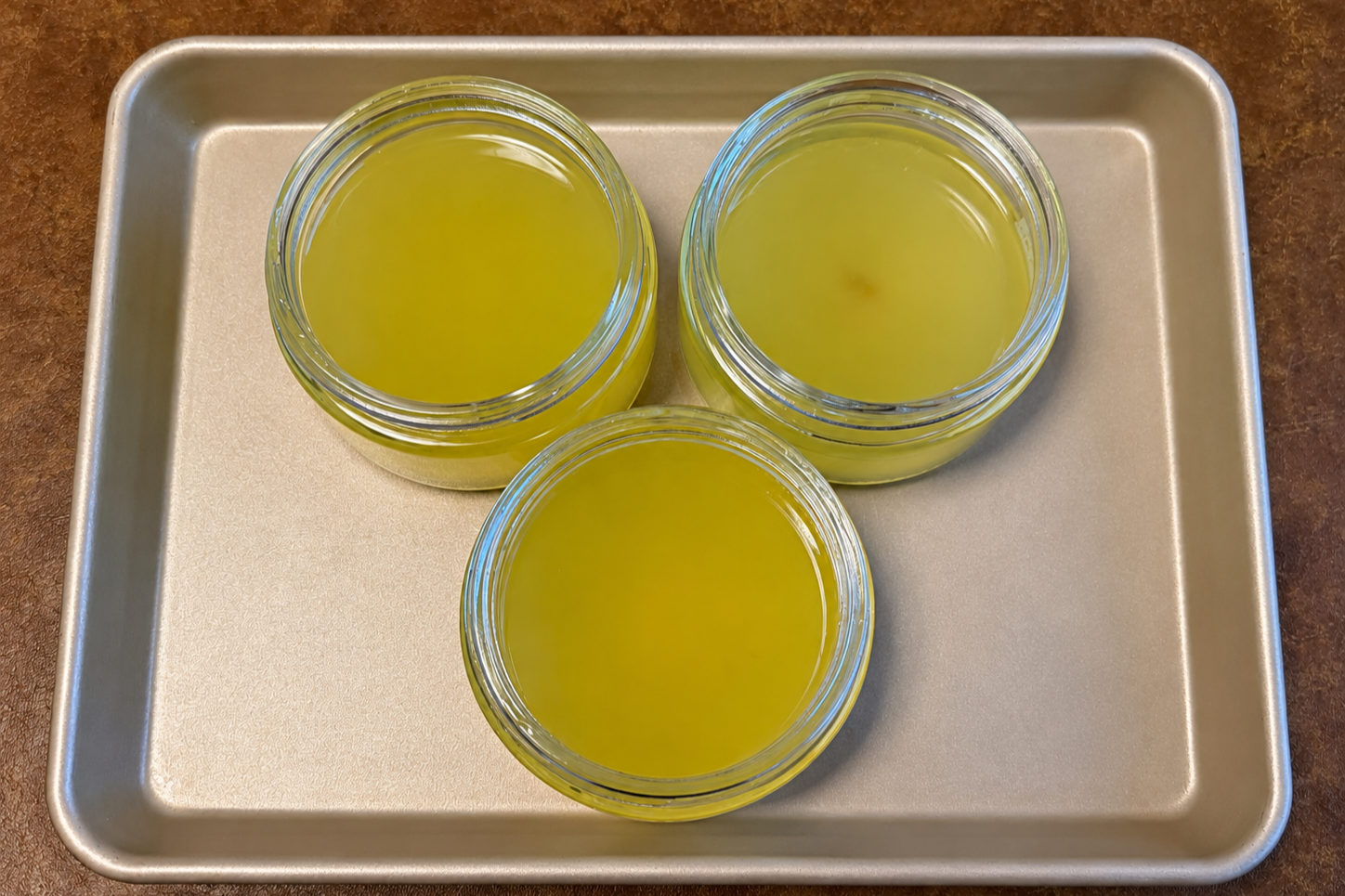
Rendered Duck Fat with Aromatics
This aromatic duck fat is slowly rendered with ginger, shallots, garlic, and fragrant herbs, creating a rich, flavorful cooking fat perfect for roasting vegetables, sautéing, or enhancing savory dishes. The crispy duck skin makes a delicious finishing topping.
Ingredients

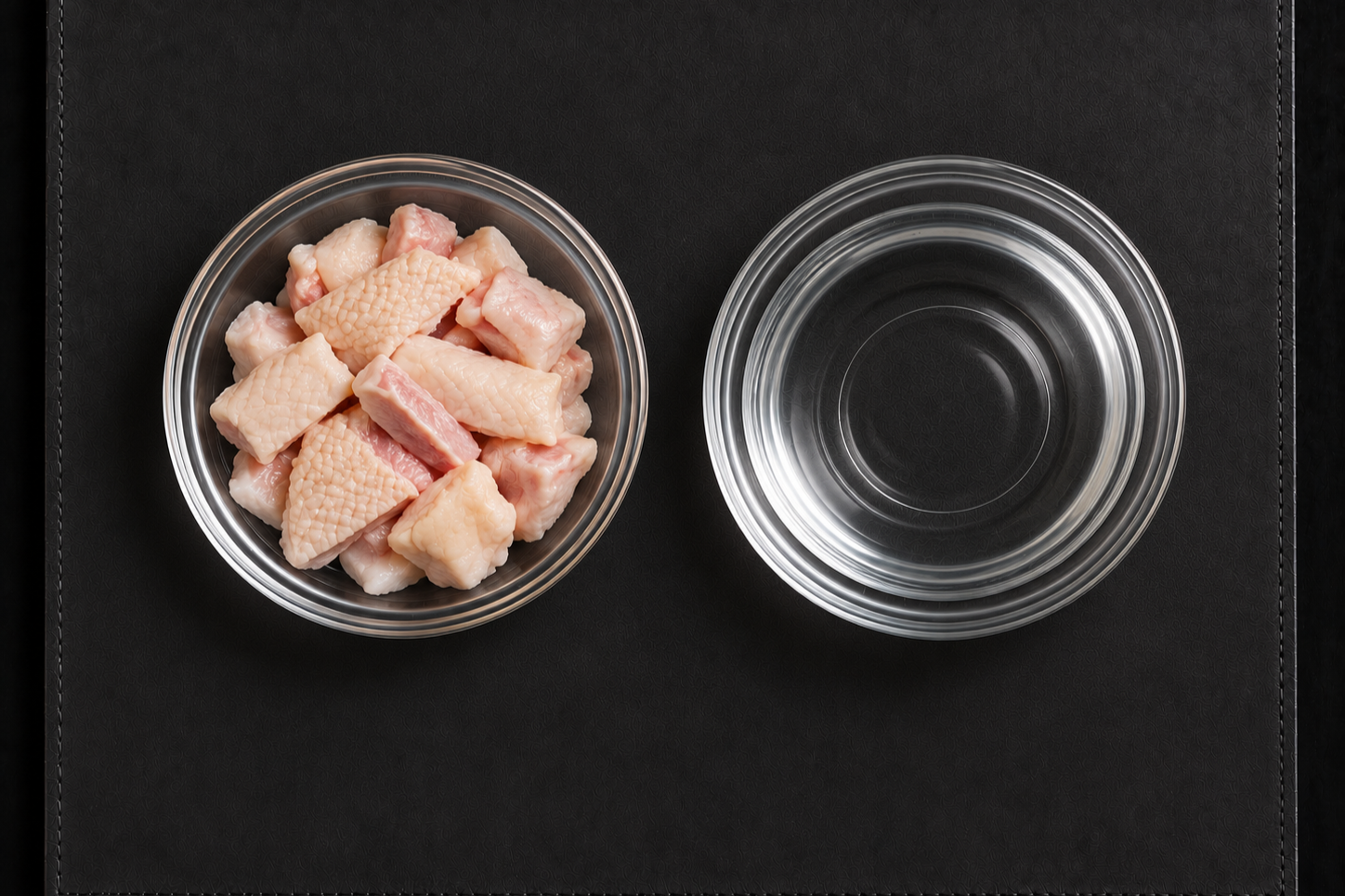
Duck fat and skin, trimmed and cut into thumb-sized pieces
Water, for cleaning and rendering
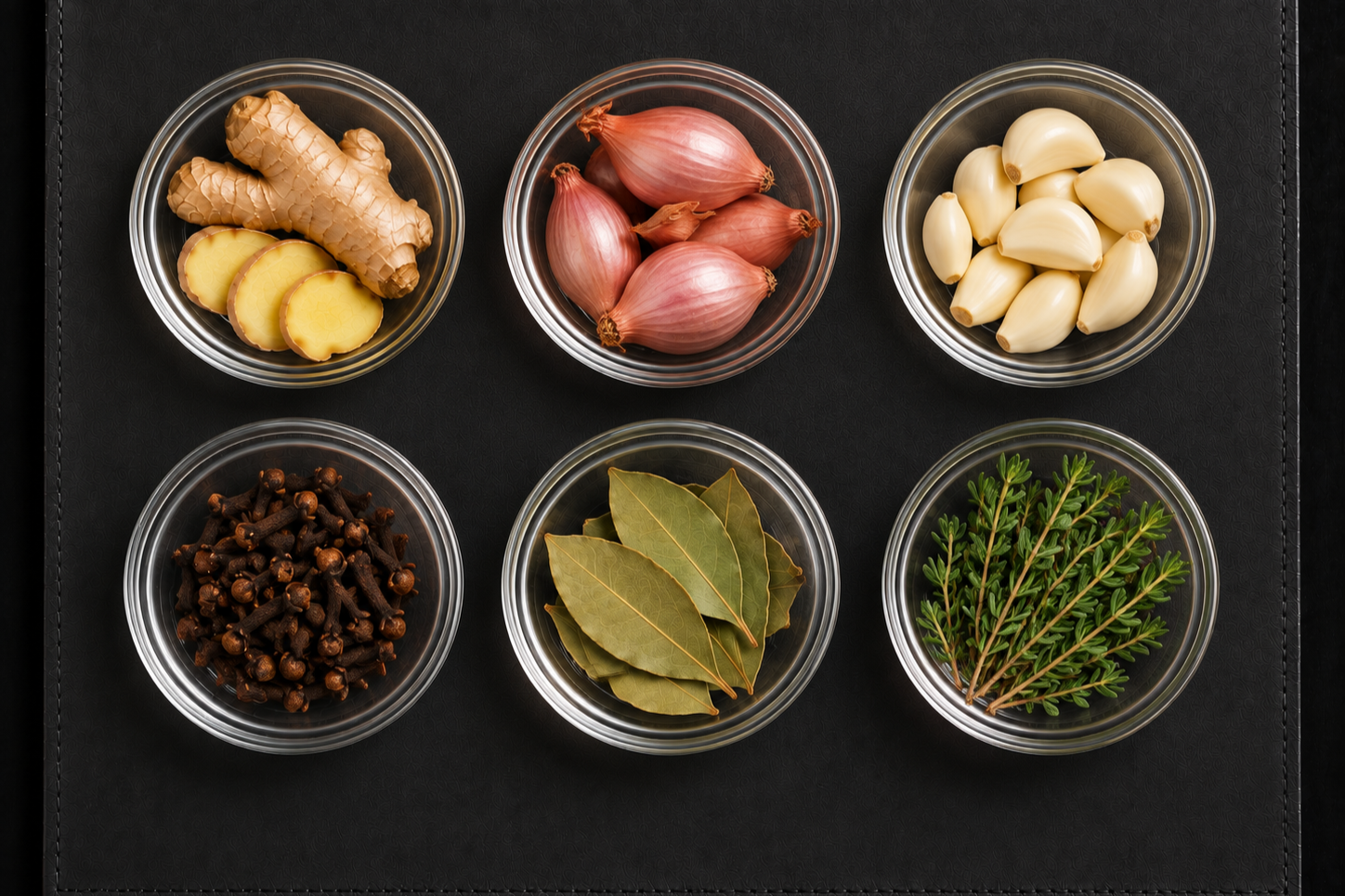
Aromatics:
Fresh ginger
Shallots
Garlic cloves
Whole cloves (spice)
Bay leaves
Fresh rosemary or thyme sprigs
Note: The quantities depend on the amount of duck fat being rendered. The aromatics can be adjusted according to preference.
Method
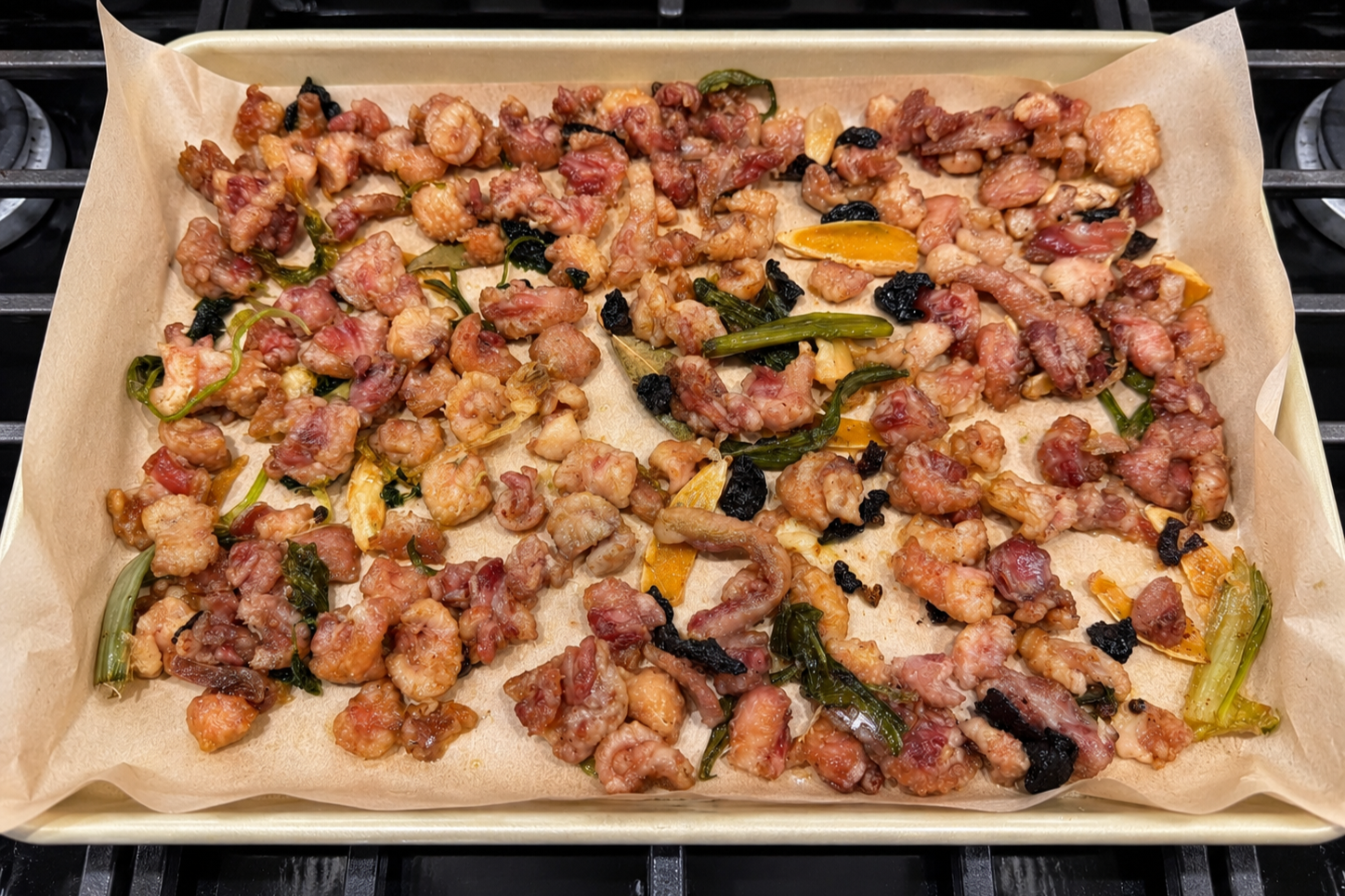
Use trimmed duck fat and skin to make flavorful cooking fat for roasting potatoes, sautéing vegetables, cooking pasta, or enriching other dishes. Bake the rendered skin until crisp and use it as a savory topping.
Preparing the Duck Fat
1. Place the duck fat and skin in a bowl. Pour boiling water over them to clean the surface, then drain and rinse them under cold water. Pat them thoroughly dry with a clean towel, and let them air-dry briefly to remove any remaining moisture.
2. Cut the fat and skin into pieces roughly the size of your thumb.
Rendering
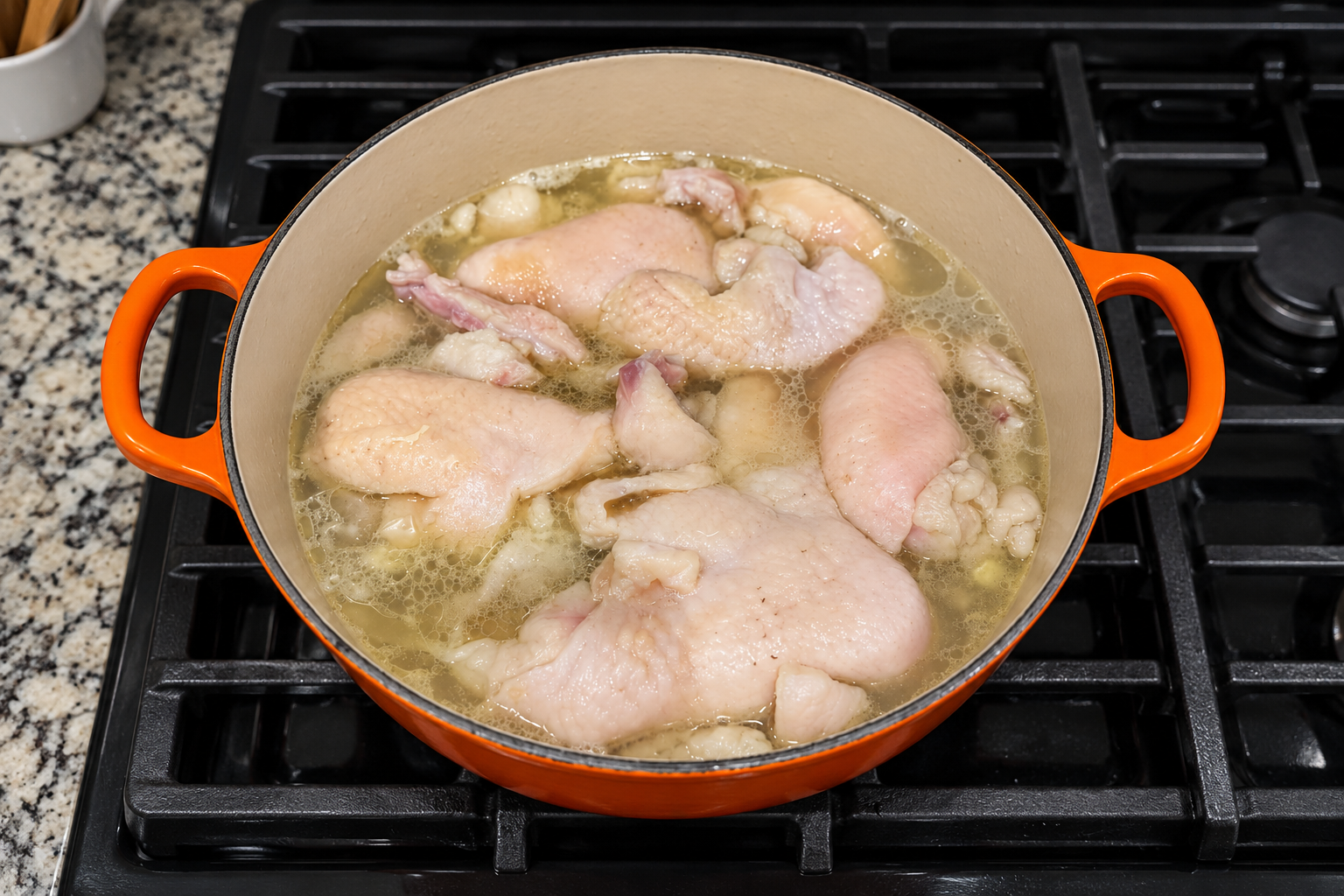
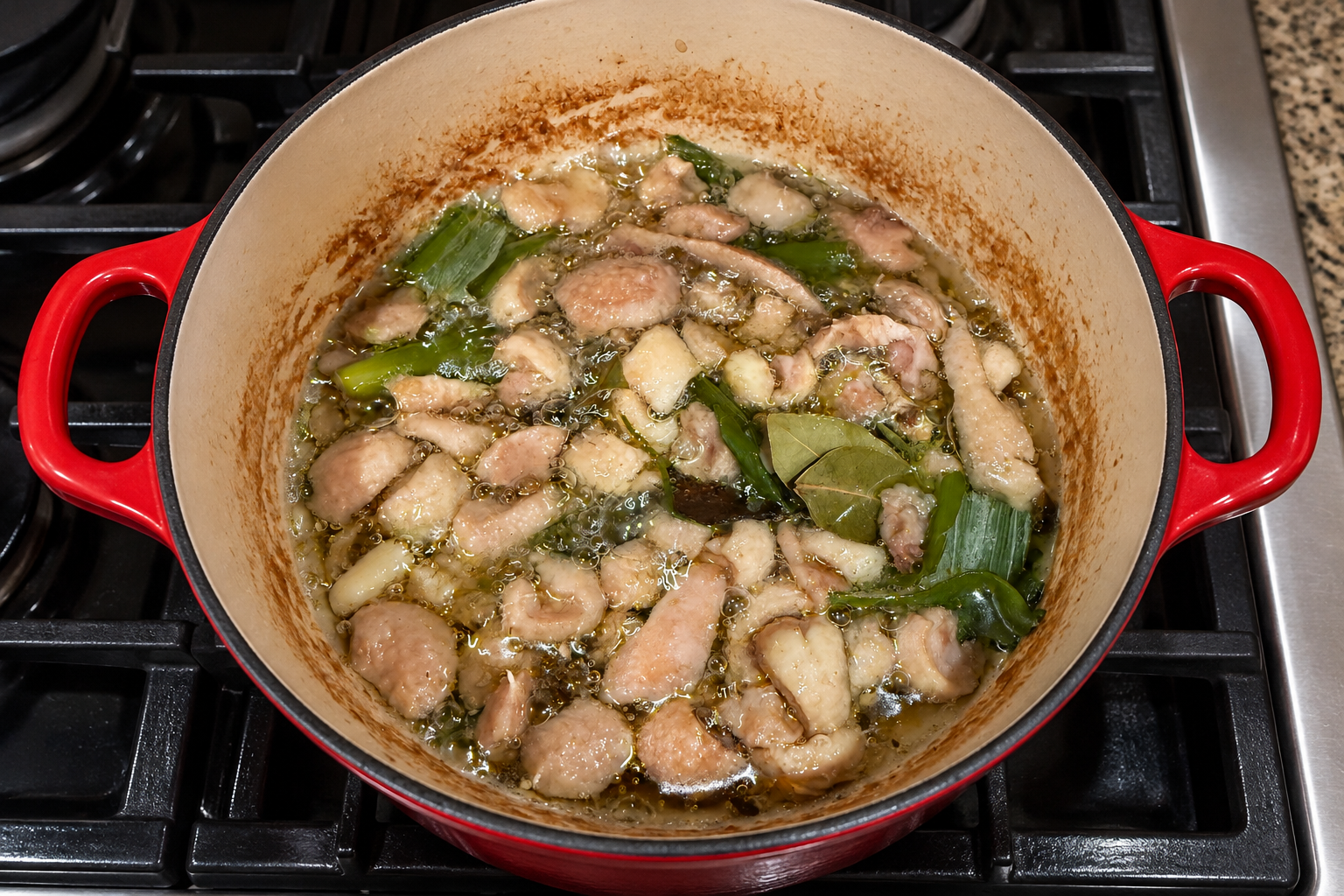
3. Transfer the pieces to a saucepan. Add enough cold water to reach halfway up the fat; do not fully submerge the pieces.
4. Bring the mixture to a boil over high heat. Once it boils, reduce the heat to medium-low or low and simmer gently. Stir regularly and monitor the pan closely.
5. If you use a temperature-controlled cooking surface, maintain a temperature of approximately 80–90°C (176–194°F), adjusting as needed to keep the mixture at a gentle simmer.
6. Continue cooking until the water evaporates and the fat begins to render. Once the water has evaporated, keep the heat low to prevent the fat and solids from burning.
8. Keep the herbs whole or tie them into small bundles whenever possible. Avoid adding loose leaves, which can burn in the hot fat and create a bitter flavor.
9. Continue simmering until the aromatics become lightly browned and fragrant. Remove them before they darken further.
Finishing the Duck Fat
10. Continue rendering until the duck skin and remaining fat turn lightly golden. Do not allow them to become deeply brown in the saucepan.
11. Scoop out the solids and let the excess fat drain back into the pan. Some caramelized residue may remain on the bottom; this is acceptable as long as it has not burned. Keep the heat low throughout this final stage.
12. Strain the warm fat through a fine-mesh strainer into a clean, heat-safe container. Let it cool before covering and refrigerating.
Adding Aromatics
7. Add aromatics such as:
Ginger
Shallot
Garlic
Whole cloves
Bay leaves
Rosemary or thyme sprigs
Crisping the Duck Skin
13. Spread the drained duck skin on a baking sheet. Bake it at approximately 350°F (175°C) until it becomes golden and crisp. Watch it closely, because the skin can brown quickly after most of its fat has rendered.
Notes
Use the crispy skin like bacon: scatter it over salads, serve it with sautéed vegetables, or add it to pasta and other savory dishes.
This process yields both aromatic rendered duck fat and crispy duck skin.